

AndaSeat Easter Sale Highlights Phantom 4 as Consumers Reassess the Limits of Static Seating
2026 Easter Sale AndaSeat
AndaSeat Phantom 4
AndaSeat Phantom 4 Key Feature
AndaSeat Easter Sale Highlights Phantom 4 as Consumers Reassess the Limits of Static Seating
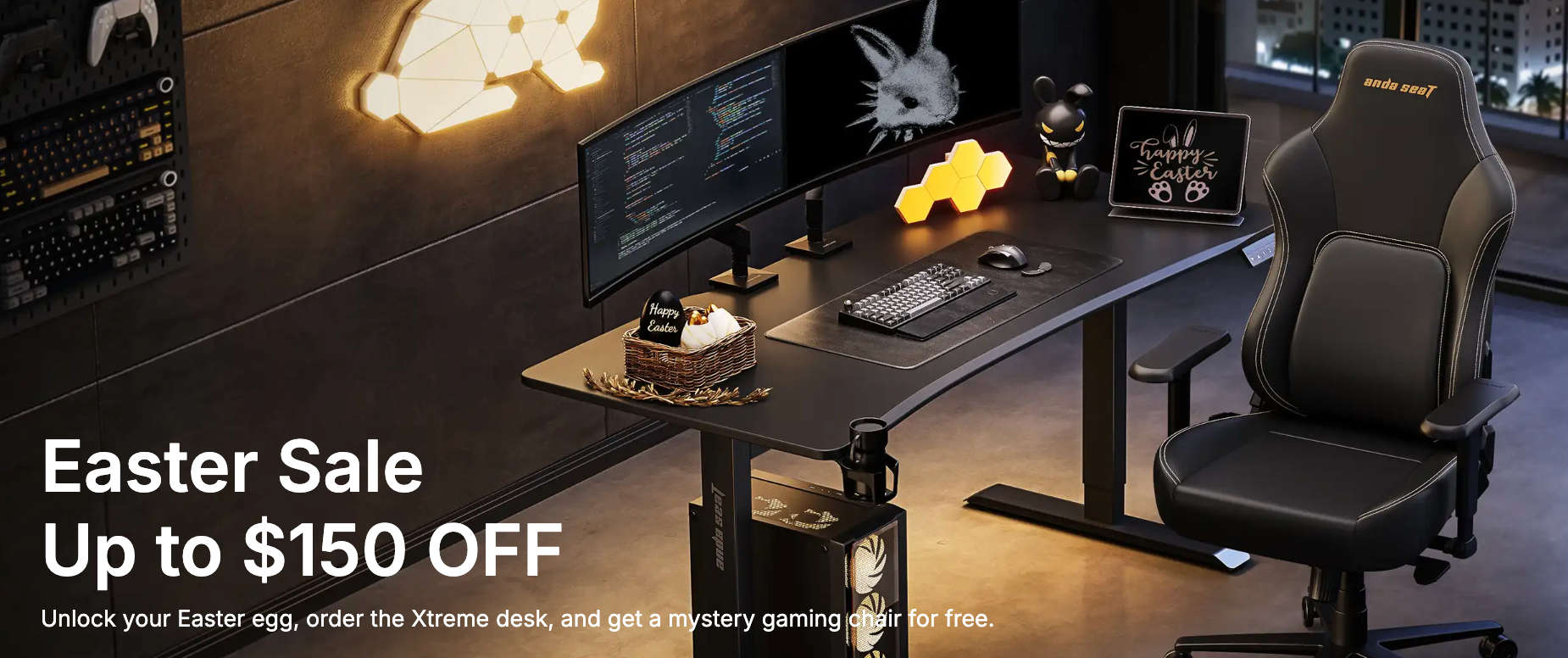
SPOKANE, WA, UNITED STATES, April 7, 2026 /EINPresswire.com/ -- AndaSeat has launched its Easter Sale campaign with seasonal pricing across selected products, including messaging around savings of up to $150. The campaign also includes an Easter-themed chair promotion tied to selected purchases. In this release, however, the company’s primary product focus is Phantom 4, a chair positioned around a growing consumer concern that extends beyond seasonal retail: how prolonged sitting and constantly shifting daily routines are changing expectations for ergonomic seating.That concern has remained visible as screen-based routines continue to shape how people work, study, and spend leisure time. The World Health Organization states that sedentary behaviour includes waking activities such as sitting and reclining and notes that higher amounts of sedentary behaviour are associated with poorer health outcomes. WHO also states that many adults do not meet recommended physical activity levels, adding to a wider public conversation about inactivity, posture, and time spent at desks.
At the same time, workplace ergonomics guidance has continued to emphasize that discomfort does not come from one single source. OSHA’s computer workstation materials note that poorly matched desk and equipment arrangements can contribute to awkward postures such as raised shoulders, extended reaching, leaning forward, and misalignment of the head, neck, and torso. NIOSH materials also note that maintaining the same position for long periods can contribute to muscle fatigue and reduced blood flow, even when that position is otherwise considered neutral.
For many consumers, that has changed what they expect from a chair. The question is no longer only whether a chair provides support in one upright posture. It is increasingly whether the chair can continue to feel supportive when the user leans forward to type, shifts during a call, relaxes briefly between tasks, or moves from work into gaming in the same setup. AndaSeat said Phantom 4 was developed around this change in behavior.
Why Static Seating Assumptions Are Under Pressure
In many home and hybrid setups, chairs are no longer being used for one narrow category of activity. A single seat may be used for focused office work in the morning, meetings later in the day, entertainment in the evening, and short recovery moments in between. These transitions may happen in the same room, at the same desk, and often without any meaningful reset of the workstation itself.
That has put more pressure on products built around static support assumptions. A chair may feel aligned when the user is centered and upright, but less natural when that same person moves between different arm positions, torso angles, and activity types over several hours. Media attention around seating has increasingly reflected this shift, with more discussion moving away from isolated feature lists and toward how products perform under realistic daily use patterns.
AndaSeat said this was one of the key considerations behind Phantom 4. The chair was not designed only around the idea of extended sitting, but around the reality that modern sitting is rarely fixed. In the company’s view, support now has to account for movement, repetition, and the overlap between different forms of screen time.
The Consumer Pain Point Behind Phantom 4
The most common frustrations users report in desk seating are often cumulative rather than dramatic. A person may begin the day in a relatively neutral position but gradually lean forward during concentrated work, raise the shoulders when arm support no longer feels aligned, shift weight during meetings, and recline unevenly when moving into less task-intensive activities. None of these adjustments is unusual on its own. The problem is that they happen repeatedly.
Public ergonomics guidance has reinforced why this matters. OSHA advises that workstation arrangement should help users avoid awkward postures and allow frequently used equipment to be placed within easy reach. CDC and NIOSH materials similarly point to the risks of prolonged static positioning, awkward posture, and sustained physical exposure over time.
AndaSeat said Phantom 4 was designed as a response to this broader pattern. Rather than treating seated support as a single-position problem, the product was developed for users whose posture, focus, and task type change throughout the day.
How AndaSeat Frames Phantom 4
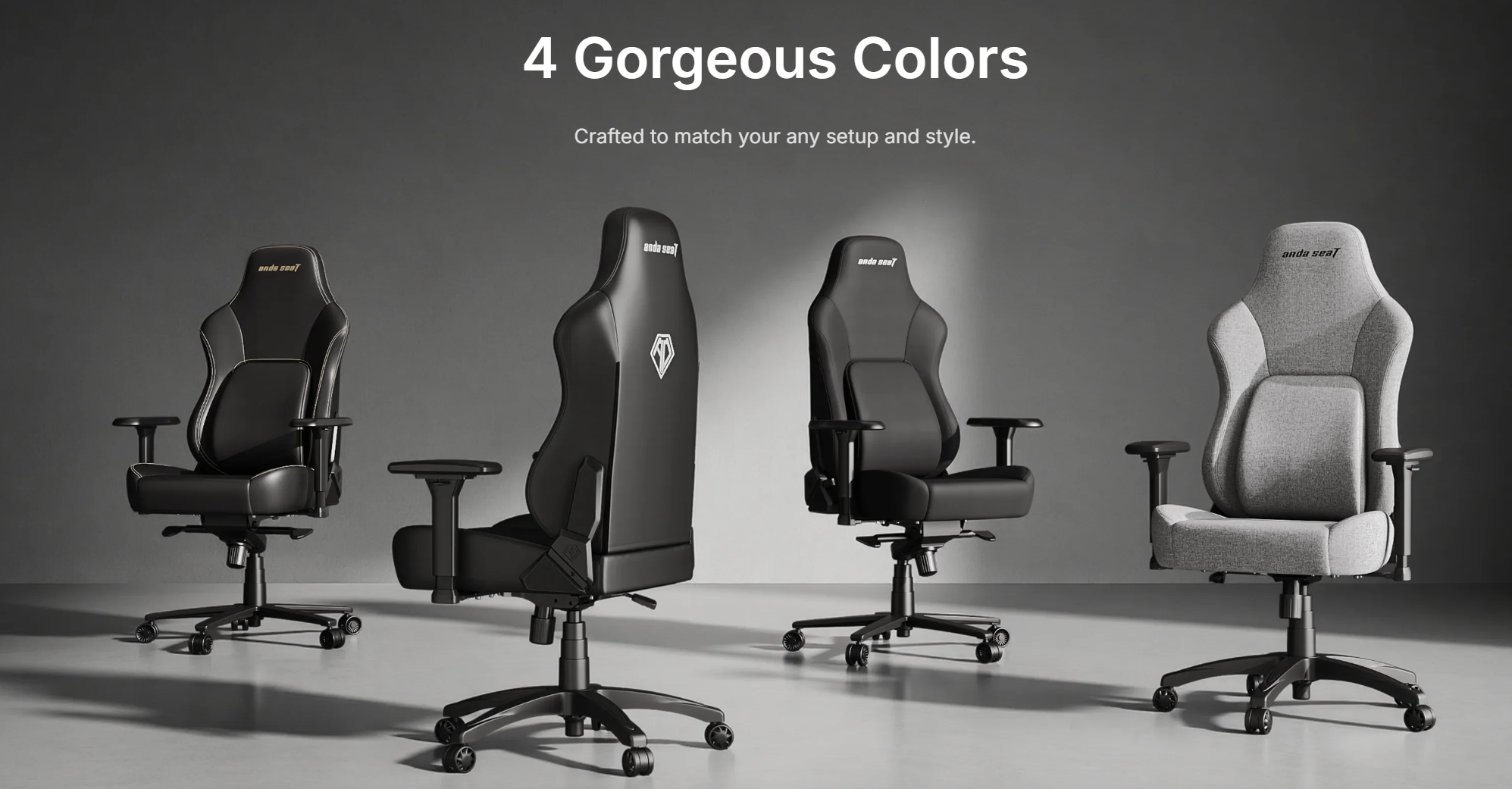
According to AndaSeat, Phantom 4 is an ergonomic chair series developed for work, home, and gaming use. The company frames the chair around the idea of active sitting, where movement and posture adjustment are considered part of normal use rather than interruptions to it.
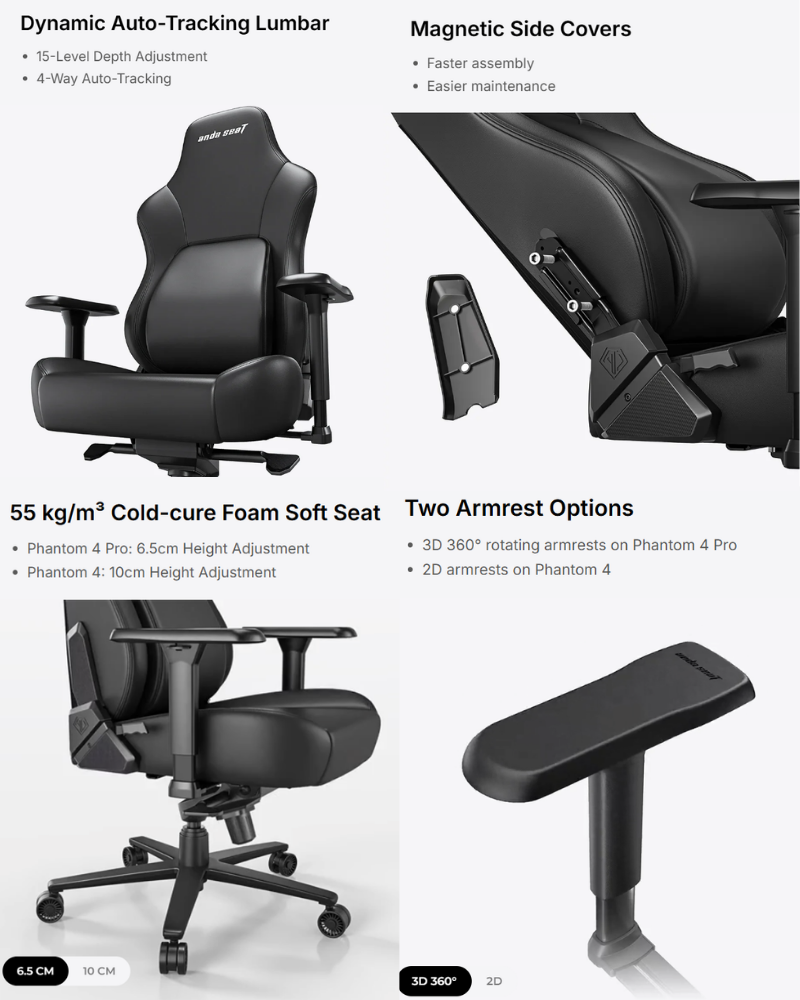
A central part of that concept is the series’ dynamic auto-tracking lumbar system, which AndaSeat describes as a support structure designed to respond more naturally as seated posture changes. The chair also includes a multi-level depth adjustment system intended to give users greater control over how support interacts with the lower back across different sitting habits.
AndaSeat positions these features not as an isolated technology story, but as part of a larger design response to how people now use chairs. In that framing, Phantom 4 is intended for users who do not separate work posture, leisure posture, and short in-seat recovery into completely different products or spaces.
Product Focus Beyond Lumbar Support
While the motion-responsive lumbar system is central to the Phantom 4 story, AndaSeat also highlights other elements of the series that reflect this broader design logic.
The Phantom 4 Pro includes a 3D 360-degree rotating armrest system, while the Phantom 4 uses a 2D armrest configuration. The two models also differ in head pillow structure, with a magnetic memory foam pillow on the Pro model and an elastic-strap pillow on the standard version. AndaSeat states that the seat-height adjustment range also differs between models. Together, these variations suggest that the series was built to support different levels of movement, task switching, and personal seating preference within the same overall design language.
This matters because upper-body positioning is often a large part of seated fatigue. OSHA’s workstation guidance notes that improper keyboard and pointing-device distance can lead to leaning forward, reaching, and awkward arm angles. In that context, armrest adjustability and upper-body support become part of how the chair supports changing activity, not just part of a specification sheet.
Why Phantom 4 Fits the Easter Timing
Although Easter campaigns are commonly associated with seasonal promotions, they also arrive during a period when many households begin reorganizing rooms, reassessing home equipment, and making changes to spaces that have become cluttered or less effective over time. For workstation products, that timing creates a practical link between seasonal retail activity and broader conversations about how people use their furniture.
AndaSeat’s Easter campaign places Phantom 4 in that context. The company’s seasonal messaging includes Easter-specific promotional language, but the broader product angle in this release is tied to a more durable consumer issue: many people are still spending long hours seated, often in spaces that have to support work, leisure, and personal time all at once.
Within that setting, Phantom 4 is positioned not simply as a new chair within a holiday campaign, but as a response to the limits of seating designed for a more static and single-purpose routine.
A Chair Designed for Overlap
What distinguishes the Phantom 4 narrative from a conventional seasonal sales message is the way AndaSeat connects the product to overlapping daily behaviors. A chair now has to support more than one mode of use. It may need to handle keyboard work, video meetings, short breaks, media consumption, and gaming without asking the user to treat each activity as if it belongs to a separate environment.
AndaSeat said Phantom 4 was developed with that overlap in mind. In the company’s view, the future of ergonomic seating is not defined only by how a chair supports a user at one moment, but by how well it remains coherent as behavior changes throughout the day.
About the Easter Sale
AndaSeat’s Easter Sale includes seasonal pricing across selected products and campaign messaging around savings of up to $150. The promotion also includes an Easter-themed chair offer associated with selected purchases. In this release, however, the company’s emphasis remains on Phantom 4’s role in addressing changing seating expectations rather than on promotional language alone.
About AndaSeat
Founded in 2007, AndaSeat develops ergonomic furniture products for gaming, work, and home environments. Its product portfolio includes ergonomic chairs, desks, and related workspace products designed for hybrid users, home setups, and gaming spaces.
Caroline Chen
AndaSeat
+86 139 2232 2347
email us here
Visit us on social media:
LinkedIn
Instagram
Facebook
YouTube
TikTok
X
Legal Disclaimer:
EIN Presswire provides this news content "as is" without warranty of any kind. We do not accept any responsibility or liability for the accuracy, content, images, videos, licenses, completeness, legality, or reliability of the information contained in this article. If you have any complaints or copyright issues related to this article, kindly contact the author above.
