
Local climate justice leaders share community priorities for Seattle’s Climate Action Plan
Years of community advocacy and partnership are helping shape Seattle’s climate future. Together, we’re updating Seattle’s Climate Action Plan, the City’s plan for how we will reduce pollution, prepare for climate impacts, and build a healthier city for everyone.
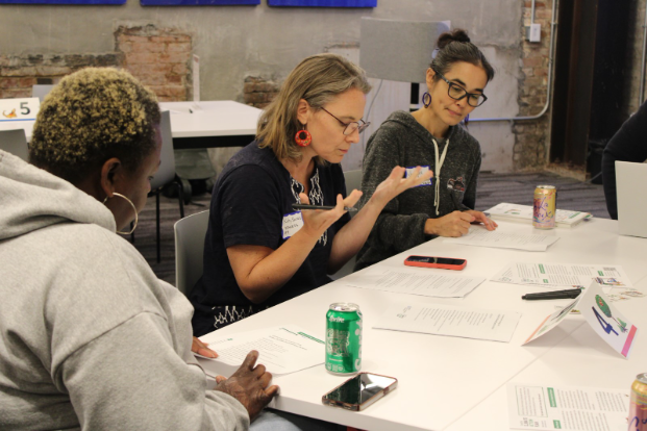
Earlier this month, nearly two dozen current and former grantees of our Environmental Justice Fund and First Peoples Climate Fund gathered at Metropole, a nonprofit center for communities of color located in downtown Seattle.
Participants came together for a learning circle to connect, collaborate, and give feedback on the Climate Action Plan, ensuring its priorities reflect the perspectives of communities hit first and worst by climate change impacts. The gathering built on conversations we’ve been having throughout the process to update the plan.
Building on years of community partnership
More than a decade ago, our office partnered with community leaders to shape a vision to advance environmental justice in Seattle. The result was the Equity & Environment Agenda, which identified community priorities and strategies for advancing racial equity in Seattle’s environmental work.
That community advocacy helped create the Environmental Justice Fund, Seattle’s grant program that invests in projects in communities hit hardest by climate impacts like extremely hot days, flooding, and polluted air. Since launching the Fund in 2018, we’ve hosted learning circles for grantees to build relationships and help shape Seattle’s climate future.
The First Peoples Climate Fund built on this community-driven approach. The Fund, announced earlier this year, was a landmark $5.5 million investment in a range of climate strategies that prioritize Tribal and Native leadership in addressing the region’s climate challenges.
Sharing community priorities
At the learning circle, participants explored draft action families that will help organize Seattle’s updated Climate Action Plan. We call them “action families” because climate solutions are intersectional and can have multiple benefits.
In the past two years, through our conversations with partners and community members, several priorities for Action Families have emerged that overlap: clean and connected transit, protecting public health, workforce development, climate-ready buildings, reuse and waste prevention, climate adaptation, and more.
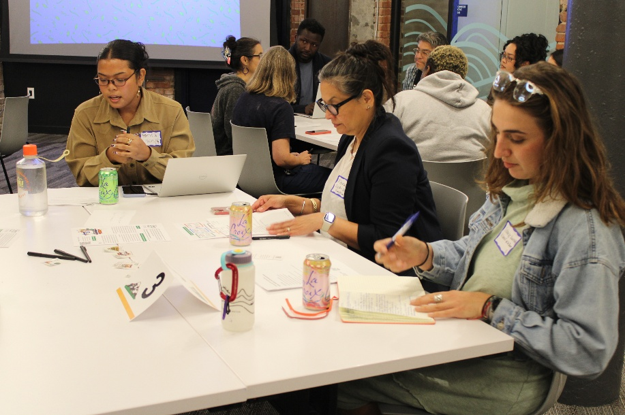
In small groups, the grantees discussed which climate actions felt most important to them and the communities they serve, and what the City should keep in mind as we move from planning to implementation.
One participant stated, “The connection between humans and the environment is not separate,” highlighting the need for a unique and comprehensive approach to addressing future climate impacts.
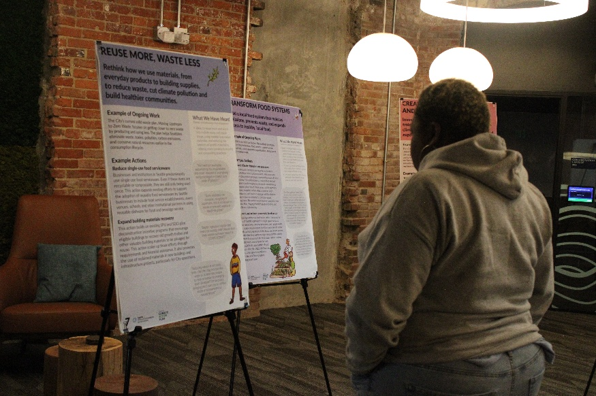
Around the room, each table brought together people with different experiences and areas of expertise. Priorities varied, but several shared themes emerged:
- Prepare communities for the climate impacts that are here now while making long-term progress. One group with organizations based in the Duwamish Valley raised questions about what resources are available to help people after extreme weather events like flooding. Others elaborated on this, discussing programs for air purifiers and air conditioning for older adults and care facilities.
- Make climate information easier to access. At multiple tables, grantees emphasized the importance of strong communication networks in frontline communities. Another group talked about meeting people where they are, including at schools, churches, community events, and other trusted spaces.
- Invest in community leadership and climate careers. Grantees at one group discussed how to get young people involved in climate action, and a group nearby discussed how youth engagement overlaps with workforce development. Participants also connected nature restoration work with opportunities for young people to access safe workplaces, jobs, unions, and sustainable wages.
- Connect climate solutions across issues. Another table discussed how community-led work intersects with different areas, from climate careers to resilience and public health. They encouraged the City to embrace these connections and opportunities for collaboration within government.
Thank you to all of our grantee partners for sharing your time, personal experiences, and expertise with us!
Zooming in on two community-led solutions
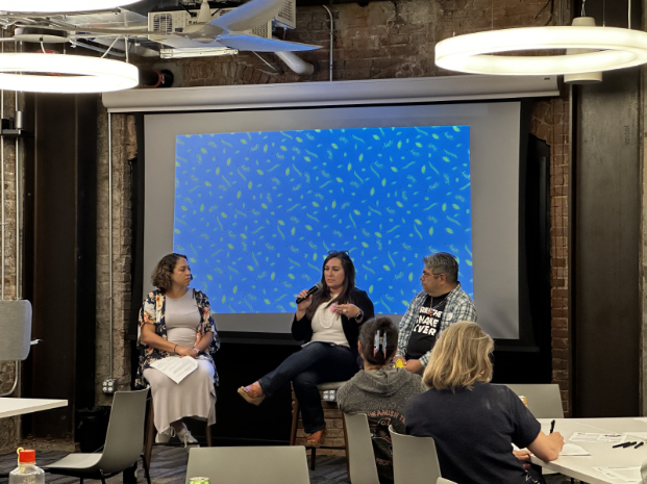
The learning circle also included a panel with Brenda Campbell, climate program manager for the Snoqualmie Indian Tribe, and César Garcia, co-director of Lake City Collective, who shared how their community-led work connects with Seattle’s broader climate goals.
Brenda spoke about the importance of climate planning to Tribal sovereignty and energy sovereignty. With support from the First Peoples Climate Fund, the Snoqualmie Indian Tribe is advancing work on the Tribe’s Comprehensive Climate Action Plan by restoring critical habitats, protecting access to First Foods, and implementing plans to reduce pollution from buildings.
César shared how funding has helped Lake City Collective create green spaces based on what community members said they wanted, showing how investments can support community-led priorities and shape where people live. An Environmental Justice Fund grant helped Lake City Collective build a neighborhood Environmental Justice Action Plan in 2020.
What’s next
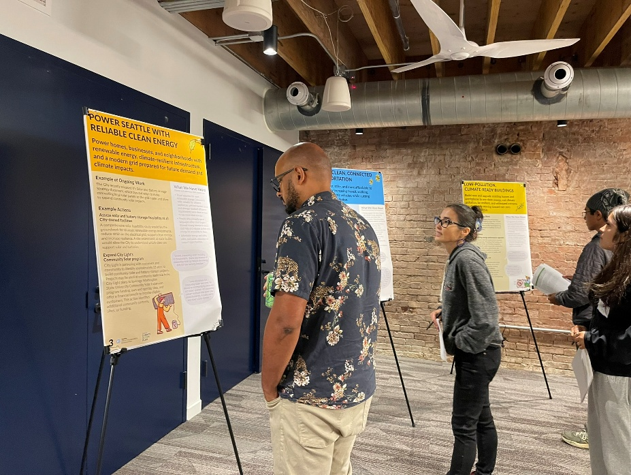
This fall, we’ll release an engagement report highlighting what we’ve heard from community members and partners through community assemblies, partner forums, learning circles, a public survey, and other engagements that will shape the Climate Action Plan.
Subscribe to our Climate Action Plan newsletter to get the engagement report and other updates!
Legal Disclaimer:
EIN Presswire provides this news content "as is" without warranty of any kind. We do not accept any responsibility or liability for the accuracy, content, images, videos, licenses, completeness, legality, or reliability of the information contained in this article. If you have any complaints or copyright issues related to this article, kindly contact the author above.
